This is today’s edition of The Download, our weekday newsletter that provides a daily dose of what’s going on in the world of technology. An AI “mind-reading” tool can reconstruct what you’re looking at based on a brain scan A new AI tool can guess what you’re looking at just by analyzing your brain scans—and recreate that image with remarkable precision. It can go the other way too, and predict a person’s brain activity based on what they’re looking at. The researchers hope the “mindreading” tool could reveal more about how the brain works. It could also help locked-in people communicate and, incredibly, maybe even allow scientists to recreate the content of dreams. But other scientists warn that a similar approach could reveal people’s inner thoughts and mental imagery, potentially without their consent. Here’s how AI is getting closer to reading images from the brain. —Jessica Hamzelou How smaller, distributed batteries could help the grid Large, utility-scale battery installations are coming online quickly around the world. But there’s been pushback from communities, especially population-dense ones like NYC, because of concerns about relatively rare but high-profile battery fires. Faced with those obstacles, some startups are getting creative, finding ways to use relatively small batteries in unexpected places, from induction stovetops to food carts. By deploying these more consumer-focused batteries, the companies are helping people directly, cutting pollution or power bills. These units are small on their own, but could add up to a lot of capacity. And as batteries get cheaper, they could find their way into more corners of our lives. Here’s why batteries could help ease pressure on the grid. —Casey Crownhart This story is from The Spark, our weekly climate tech newsletter. Sign up to receive it in your inbox every Wednesday. The must-reads I’ve combed the internet to find you today’s most fun/important/scary/fascinating stories about technology. 1 The Pentagon has tapped Elon Musk to co-lead a future warfare project Project Meridian will examine battlefields from underground to space. (CNBC) + Musk will be joined by Palmer Luckey and Newt Gingrich (Guardian) + The Pentagon also has a new autonomous warfare command. (Reuters $) + Ukraine’s new military robot travels across land and water. (Newsweek) + The Pentagon wants an AI-powered lie detector. (MIT Technology Review) 2 Chinese hackers impersonated ex-US officials to spy on American AI The email campaign also impersonated an Anthropic employee. (CNN) + They targeted experts in military AI and export controls. (Reuters $) + OpenAI has accused China’s Moonshot AI of copying its models. (CNBC) + China’s DeepSeek and Huawei have teamed up on chip software. (NYT $) + Could China win the AI race? (MIT Technology Review) 3 After months of delays, Google has unveiled Gemini 4 Argon The new model aims to re-establish Google at the frontier of AI. (Reuters $) + Google says the model beats OpenAI’s Astra on many benchmarks. (VB) + But some Google employees are skeptical about its coding performance. (Bloomberg $) + Google is testing paying publishers for AI search results. (Information $) 4 The FTC is investigating OpenAI, Anthropic, and other AI labs The regulator will probe potential consumer harms from AI agents. (Axios) + It’s the first official US enforcement action on rogue agents. (Guardian) + Who’s liable when AI agents go rogue? (MIT Technology Review) 5 Scientists could soon create “mirror life” that evades nature’s defenses Biologists in Singapore have called for new safeguards. (Economist $) + Synthetic mirror life could threaten life on Earth. (MIT Technology Review) 6 California has legalized balcony solar for renters and homeowners The move could give plug-in solar a huge new market. (LA Times $) + The balcony solar boom is coming to the US. (MIT Technology Review) 7 Apple is planning a major push into the smart-home market this month The new hub is expected to launch on October 13. (Bloomberg $) + New CEO John Ternus wants more product releases and fewer staff. (Quartz) 8 A new implant network uses body tissue as its wiring It could connect tiny sensors and medical devices. (Ars Technica) 9 A modified parasite drug could be a breakthrough for endometriosis It targets disease-causing cells and reduced lesions in mice. (Nature) 10 Singapore has a new answer to low birth rates: a government dating app A Nobel-winning algorithm matches participants to one date at a time. (BBC) Quote of the day “I’ve spent my summer begging, borrowing, and stealing chips… I don’t want to say steal. Begging and borrowing!” —Logitech CEO Hanneke Faber tells the Wall Street Journal that she’s scoured the globe for chips amid an AI-driven shortage, which she says won’t ease for 12 to 18 months. One more thing Inside the hunt for the most dangerous asteroid ever As asteroid 2024 YR4 hurtled toward Earth, astronomers determined that this massive rock posed a higher risk of impact than any object of its size in recorded history. Then, just as quickly as history was made, experts declared that the danger had passed. This is the inside story of the network of global scientists who found, followed, planned for, and finally dismissed the most dangerous asteroid ever found—all under the tightest of timelines and with the highest of stakes. Find out how they did it. —Robin George Andrews We can still have nice things A place for comfort, fun, and distraction to brighten up your day. (Got any ideas? Drop me a line.) + A woman has discovered her adopted cat sounds like a pigeon. + This delightful essay explores the lost social life of the video store. + Meet the Greek Orthodox priest who plays an eight-string guitar tuned like an oud. + Take a virtual tour through castles, palaces, and fortresses around the world with this interactive map of over 8,000 notable landmarks.
Startups6 分钟阅读
标题为英语The Download: AI “mind-reading” and creative uses for small batteries
This is today’s edition of The Download, our weekday newsletter that provides a daily dose of what’s going on in the world of technology. An AI “mind-reading” tool can reconstruct what you’re looking at based on a brain scan A new AI tool can guess what you’re looking at just by…
MIT Technology Review作者: Thomas Macaulay2026年10月1日 (10月1日)
提供 1 种语言版本AI 摘要:要点
- This is today’s edition of The Download, our weekday newsletter that provides a daily dose of what’s going on in the world of technology
- An AI “mind-reading” tool can reconstruct what you’re looking at based on a brain scan A new AI tool can guess what you’re looking at just by…

全文为英语
相关文章
Startups1 分钟
为 Blender 创建了一个 AI 代理,可以通过聊天控制 3D 场景
🧊 为 Blender 创建了一个 AI 代理,可以通过聊天控制 3D 场景。开发人员推出了 Loopcut——带有内置人工智能助手的 Blender 的修改版本。现在,您无需手动设置场景,只需用文字描述任务,代理就会执行必要的操作……
Telegram — GPT Time | Нейросети | ИИ
Kapital.kz

n8n:是否可以用箭头绘制业务流程
业务流程自动化已经存在了几十年。 n8n 允许您自动化在数字系统中执行的业务流程的那些阶段:链接服务、数据、条件和个人操作。您可以将 API 调用、脚本和 AI 模型添加到同一方案 -...
Bluescreen.kz
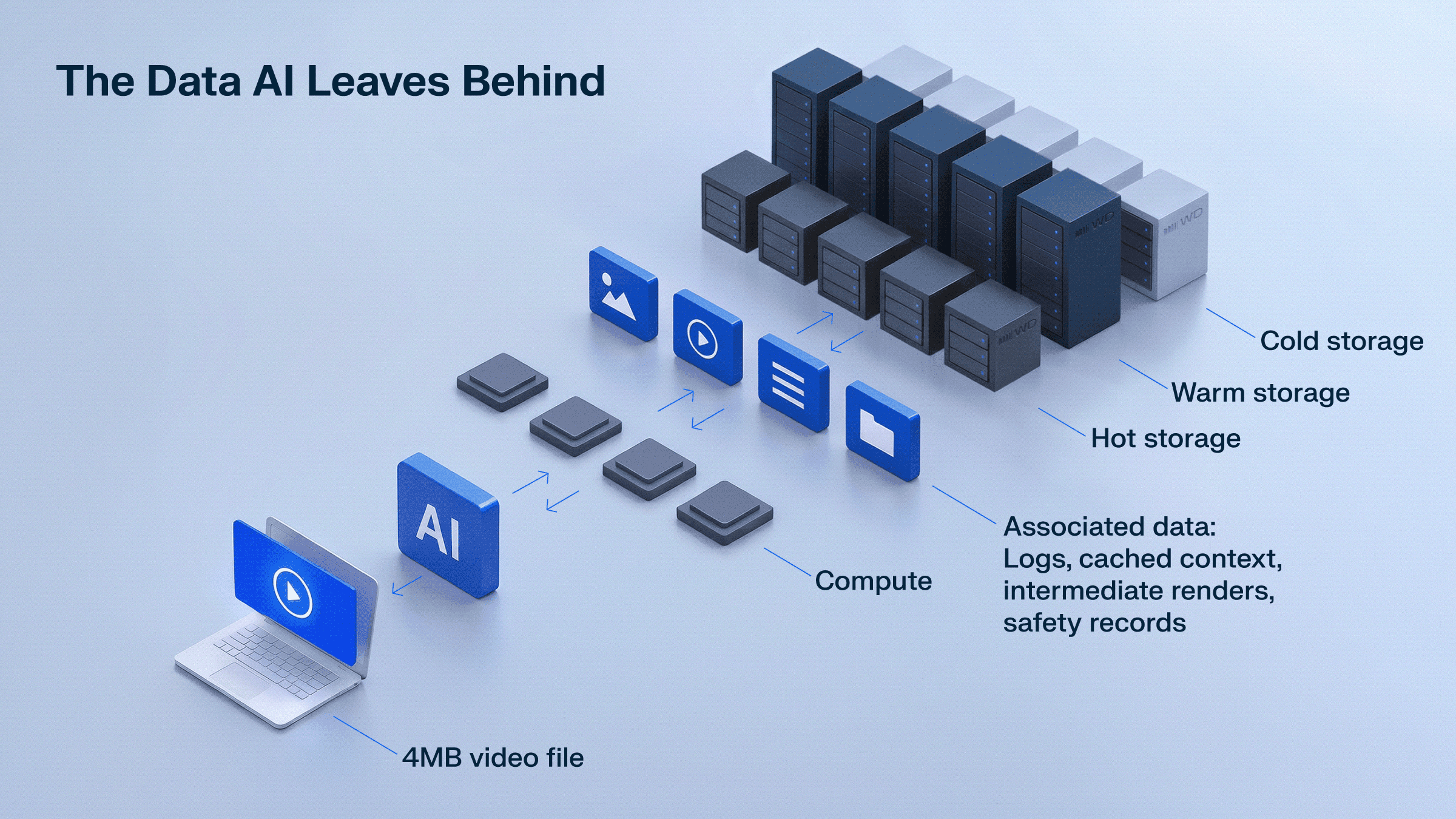
人工智能的隐藏存储费用:推理留下了什么
如果让大多数高管想象一下人工智能的成本,他们很可能会看到 GPU(具有千兆瓦功率的加速器机架)和硅的候补名单。但这张图遗漏了一些东西:数据存储成本。模型响应后数据会发生什么?大部分后端数据...
MIT Technology Review